
Last Updated on: 22nd January 2024, 06:53 pm


J Highland
J Highland is a certified sommelier with 30 years in the liquor industry, owning a pub, a liquor store, and moonlighting as an agave spirits distiller.
Defining Cristalino Tequila
Written by: J Highland

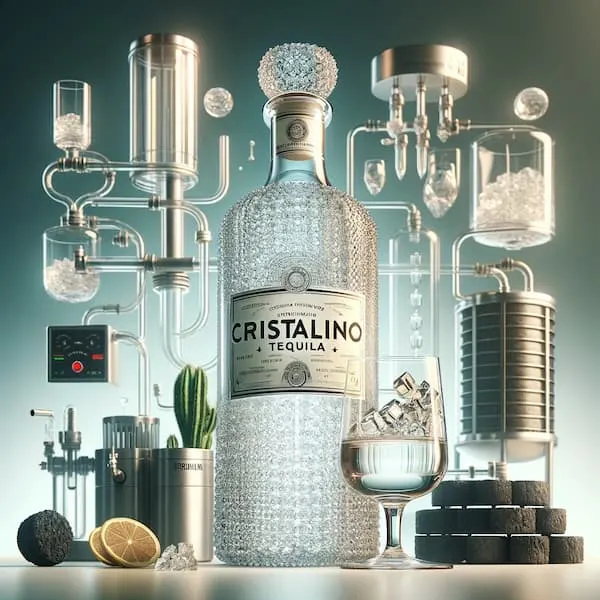
There’s always something new to discover in Tequila, and the recent buzz is all about Cristalino Tequila.
You’re in the right place if you’ve heard of it but aren’t quite sure what sets it apart from the more traditional varieties.
In this post, we’ll dive deep into what Cristalino Tequila is, how it’s made, and why it’s gaining such popularity.
What exactly is a Cristalino Tequila?
“Cristalino Tequila is an aged Tequila—be it Reposado, Añejo, or Extra Añejo—that undergoes a charcoal filtering process to remove its color, giving it the appearance of a Blanco Tequila while retaining the matured flavors of its aging.”, states Tequila expert Neil Coleman.
Bridging the gap between tradition and innovation, this unique category in the Tequila world offers the depth and complexity typically associated with aged Tequilas yet with the crystal clarity of a Blanco.
Related: Best Cristalino Tequila
Which was the First Cristalino?
A notable milestone in the Cristalino journey was the introduction of Don Julio 70.
Released to honor the 70th anniversary of Don Julio Gonzalez’s tenure as a master distiller, this pioneering Cristalino hit the market.
Its debut highlighted the versatility of Tequila and paved the way for fans to experience a harmonious blend of aged tequila’s richness with the refreshing visual appeal of Blancos.
Production Process


Aging:
Like other Tequilas, Cristalino begins its journey as a reposado, añejo, or extra-añejo, aged in oak barrels.
Throughout its time in these barrels, it acquires rich colors, flavors, and aromas from the wood.
Charcoal Filtering:
After aging, Tequila is introduced to a special procedure known as activated charcoal filtering.
Due to its porous nature, activated charcoal acts as a magnet for the color molecules in the Tequila.
The Tequila is passed through this activated charcoal, which binds with and removes the color compounds.
However, the method is precise enough that while it strips the color, it doesn’t entirely rob the Tequila of its acquired flavors and aromatic traits from aging.
This delicate balance ensures that Cristalino tequilas remain a sensory delight while appearing visually clear.
Bottling:
Post-filtering, this Tequila is ready for its final stage.
It’s bottled as Cristalino, offering Tequila enthusiasts a drink that harmoniously melds the aged character of traditional Tequilas with the pristine appearance of Blancos.
Expected Tasting Notes
When approached in its purest form, Cristalino Tequila should naturally present the foundational flavors of agave.
This is accompanied by the gentle undertones of oak, vanilla, and caramel — traits it inherits from its time spent aging in barrels.
These subtle nuances are what make aged tequilas delightful, and in a genuine Cristalino, they are delicately woven into the primary agave taste.
Role of Additives
However, the reality is not always this romantic.
A large portion of Cristalino tequilas on the market are infused with additives.
As per Tequila regulations, certain types of tequila are allowed to contain a small percentage of additives, whether they be for flavor, aroma, or color.
Unfortunately, when additives enter the scene, the natural profile of the tequila can be overshadowed.
In many of these modified Cristalinos, the first thing you might notice is a pronounced vanilla essence, which can feel disproportionately dominant.
Moreover, there’s often a discernible touch of artificial sweetener — a note that stands out sharply to the discerning palate.
In essence, while the ideal Cristalino carries the whispers of its aged ancestry, the market’s reality is that many are dressed up with extras that move them further from their authentic roots.
Why is Cristalino Gaining Popularity?


There are several reasons why Cristalino Tequila is making waves:
Best of Both Worlds:
Cristalino Tequila offers an enticing blend for aficionados.
It melds the smooth, refined flavors of aged tequilas with the clean, vibrant profile of Blanco Tequilas.
This unique combination has made it particularly popular among Mexican youth.
Its smooth character provides an accessible entry point for new consumers, making it a favorite choice for the younger generation.
Aesthetic Appeal:
Beyond its flavor, Cristalino offers a unique visual appeal.
Its clear appearance, combined with the depth of its taste, makes it a standout ingredient in modern cocktails, enhancing the drink’s flavor and presentation.
Innovation in Tradition:
Tequila boasts a storied tradition, but the rise of Cristalino exemplifies the industry’s capacity for innovation.
It respects the time-honored Tequila production methods while adding a contemporary spin, proving that tradition and innovation coexist harmoniously.
My Take on Cristalino Tequilas: An Old-School Perspective

Cristalino Tequilas and I have a complex relationship.
To be blunt, I never drink them.
Why? To my palate, they barely echo the essence of what I recognize as Tequila.
I believe the filtration process, while innovative, strips away the core agave flavors.
What remains is a spirit that, in my view, leans closer to vodka than the robust Tequila I cherish.
If I desired a vodka-like profile, I’d opt for an actual vodka, particularly given the cost advantage.
Now, I understand the appeal of Cristalino for certain drinkers.
It’s an excellent gateway for newcomers to the world of tequila or for those who gravitate towards ultra-smooth beverages.
However, for old-school Tequila aficionados, like myself, who relish the distinct agave notes, Cristalino might disappoint.
In my Tequila journey,
I’ve always sought out those rich, agave-forward flavors, and sadly, I find them lacking in Cristalino.
Thus, I invariably find myself reaching for more traditional options.
How to Enjoy it?
While there’s no wrong way to enjoy this unique spirit, here are a few suggestions:
Neat or On the Rocks:
Cristalino Tequila shines when sipped neat or over large ice cubes, which prevents rapid dilution.
Cocktails:
While Cristalino possesses a refined flavor, I wouldn’t recommend it as the primary ingredient in cocktails.
It lacks the punchy characteristics of other Tequilas ideal for mixing, and given its price point, using it as a mixer may not be the most economical choice.
I’d lean towards a robust Blanco Tequila for cocktails, which is both cost-effective and flavorful.
Shots:
If you’re in the mood for a quick drink, Cristalino serves as a smooth shooter, often having less of the burn compared to otherTequilas.
Prices
Typically, prices for a bottle of Cristalino start around $40, suitable for those looking to experiment with this newer category of Tequila without a significant investment.
As you move up the price ladder, tequilas at the higher end, often reaching up to $100, usually represent older ages, more intricate filtering processes, or limited-edition releases from renowned distilleries.
It’s essential to remember that while price can be an indicator of quality, personal taste plays a crucial role.
Whether you opt for a bottle on the lower or higher end of the spectrum, Cristalino offers an intriguing taste experience that bridges the gap between traditional aged Tequilas and the fresh clarity of Blanco varieties.
In Conclusion
Cristalino Tequila represents the beautiful blend of tradition and innovation in the Tequila world.
It captures the deep-rooted history of Tequila-making, while simultaneously presenting a fresh, modern twist that appeals to both seasoned aficionados and newcomers alike.
As the world of spirits continues to evolve, Cristalino stands out as a testament to the endless possibilities within even the most time-honored traditions.
Whether you’re sipping it neat or mixing it into your favorite cocktail, Cristalino Tequila is sure to offer a unique and memorable experience.